Auphonic
Automatic audio post-production service that levels, denoises, cuts filler words and masters podcasts, videos and audiobooks to loudness standards.
Evaluation
What to know
Editorial notes based on the vendor's own documentation and public pricing, plus hands-on testing where a score or review is shown above. They describe fit for a job, not absolute quality.
Best for
- Podcasters wanting consistent, loudness-compliant episodes
- Educators and course creators cleaning up lecture recordings
- Audiobook narrators meeting platform loudness requirements
Not ideal for
- Music producers mixing songs
- Engineers who want granular plugin-level control
- Users needing real-time processing during live streams
Key features
- Adaptive Leveler for speaker, music and speech balance
- Noise, reverb, filler-word, cough and silence removal
- Multitrack processing with ducking and crosstalk handling
- Loudness normalization to podcast, broadcast and audiobook specs
- Transcripts, subtitles, chapters, show notes, API, n8n and Zoom integrations
Pros
- Professional-sounding results with no audio engineering knowledge
- Free 2 hours per month covers many small podcasts
- Non-expiring one-time credits suit irregular publishers
Cons
- Automated processing offers less control than a manual DAW chain
- Free tier adds an audio jingle and caps file features
- Heavily damaged recordings still sound processed
ToolifyNav verdict
Auphonic remains one of the most dependable choices for anyone publishing spoken-word audio who would rather not learn mixing. Its leveler and loudness tools solve the most common podcast problems automatically, and filler-word cutting, multitrack handling and transcripts extend it into a full post-production pipeline with an API for automation. Engineers wanting granular control will prefer a DAW, and very rough recordings can still sound processed. For podcasters, educators and narrators, the free monthly hours and non-expiring credits make it an easy, low-risk part of the workflow.
About
About Auphonic
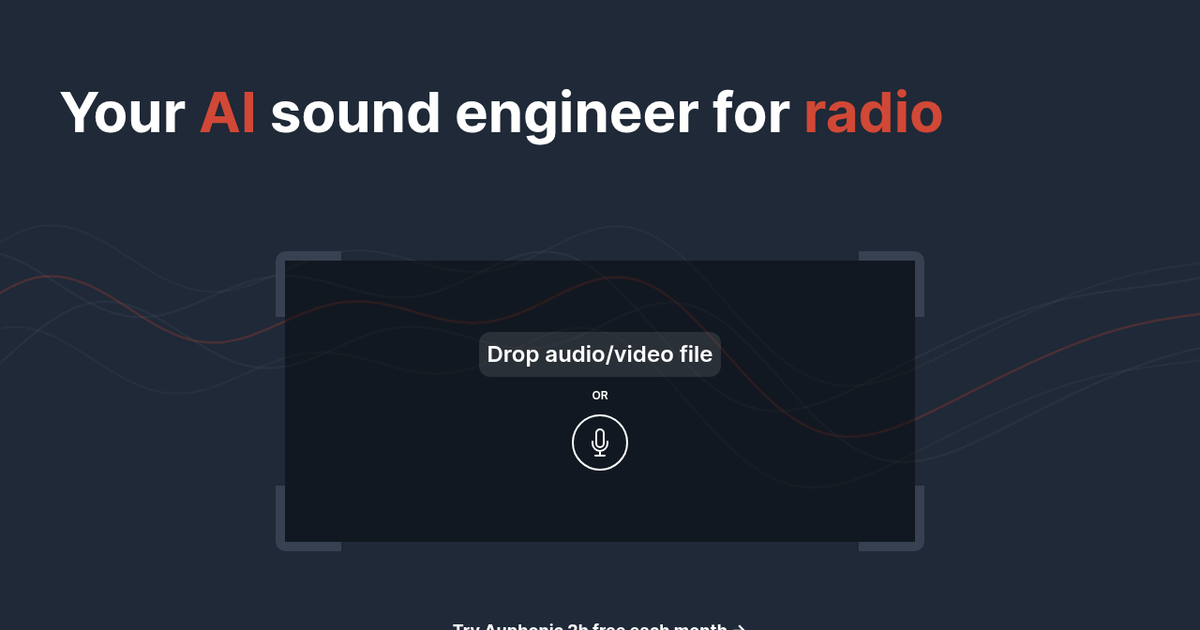
Auphonic is a web-based audio post-production service that acts like an automated sound engineer for spoken-word content. Users upload an audio or video file, choose presets, and Auphonic returns a finished master. The Adaptive Leveler balances levels between speakers, music and speech without manual compression; noise and reverb reduction can target static hum or fast-changing background sounds and either keep or remove music; filters handle de-essing, plosives, clipping and codec artifacts.
Newer algorithms cut filler words, coughs and silences, and multitrack processing handles separate microphones per speaker with automatic ducking and crosstalk removal. Loudness normalization meets targets for podcasts, broadcast (EBU R128, ATSC A/85) and audiobook platforms. Speech-to-text produces transcripts, subtitles, chapters and automatic show notes.
Workflow tools include watch folders, file transfers to Dropbox, YouTube, SoundCloud and podcast hosts, an Auphonic Editor for refining the gain curve, a full API, and recent integrations with n8n and Zoom. The service reports more than two million users. Austrian-based Auphonic offers a free monthly allowance, plus recurring plans and one-time credits that do not expire.
Related
More in Music & Audio
Same category — not a curated competitor list.



Discover More
Weekly digest
Get weekly AI tools and hands-on reviews
A short digest of new tools and hands-on breakdowns. Unsubscribe anytime.