Tunee
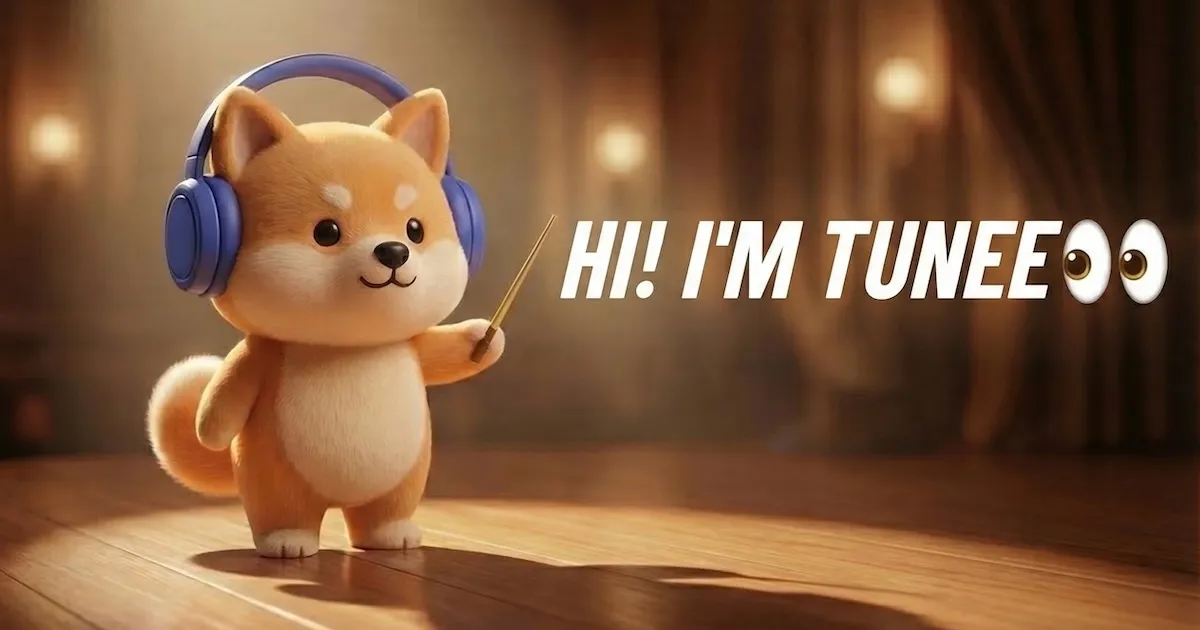
Conversational AI music agent that writes songs from chat, references or clips, then turns them into music videos with AI characters, lip-sync and motion control.
Evaluation
What to know
Editorial notes based on the vendor's own documentation and public pricing, plus hands-on testing where a score or review is shown above. They describe fit for a job, not absolute quality.
Best for
- Independent creators building an AI artist or channel
- Social video makers needing original music with visuals
- Songwriters prototyping ideas through conversation
Not ideal for
- Producers who want note-level editing
- Labels needing clear provenance for every model used
- Users who only need royalty-free background loops
Key features
- Chat-based song creation from text, lyrics, audio, image or video references
- Multi-model routing across Mureka, MiniMax, ACE-Step and others
- MV Studio for AI music videos with storyboard control
- Persistent AI artist characters, lip-sync and motion control
- Stem separation, mastering and voice cloning
Pros
- Song and video creation live in one conversation
- Paid-plan tracks include perpetual commercial rights
- Failed generations are not charged
Cons
- Free-plan songs are owned by Tunee and non-commercial
- Four credit types with different expiry rules are confusing
- Quality varies with whichever underlying model is selected
ToolifyNav verdict
Tunee is less a music model than a creative director sitting on top of several of them. The appeal is a joined-up workflow: talk a song into existence, refine it, then develop a character and a music video without leaving the chat. That makes it attractive for creators building an AI artist persona for short-form platforms. The catch is in the details, with ownership rules that differ sharply between free and paid tiers, a layered credit system, and results that depend on the routed model. Paying creators who want song and visuals in one place are its clearest audience.
About
About Tunee
Tunee frames music generation as a conversation rather than a prompt box. You describe a mood, paste lyrics, or upload a reference track, image or video clip, and the agent produces a song, asks what you would like changed and keeps iterating in the same thread. It does not rely on a single engine: Tunee routes work across about nine models, including Mureka, MiniMax, TemPolor and ACE-Step for audio and Kling for video, either automatically or by manual choice.
The second half of the product is visual. MV Studio turns any Tunee or uploaded track into a music video, with chat-driven control over characters, visual style, storyboard and shots. An AI Character feature builds a persistent artist persona with a consistent look and voice, lip-sync makes a still photo sing, and motion control directs camera and character movement. Production tools include stem separation into 2, 4 or 6 stems, one-click mastering tuned for streaming loudness, and voice cloning for a reusable AI singer.
Rights depend on plan level. Songs created on the free plan belong to Tunee and are limited to non-commercial use with attribution, while music made during a paid subscription carries full, perpetual commercial rights. Credits come from daily check-ins, monthly membership grants, events and separate purchases, each with its own expiry.
Related
More in Music & Audio
Same category — not a curated competitor list.
Discover More
Weekly digest
Get weekly AI tools and hands-on reviews
A short digest of new tools and hands-on breakdowns. Unsubscribe anytime.