Connected Papers Review: A Real Citation Map Before the Account Wall
Anonymous Connected Papers built an Attention Is All You Need citation graph in 2–3 seconds. Prior/Derivative tables, Share, and a 57.5 KB BibTeX download worked without login; Save hit the auth wall. Final rating: 4 out of 5.
Every literature review starts the same way. You find one foundational paper, open twenty tabs of its references, and lose the shape of the field. I wanted to see if Connected Papers (listed on ToolifyNav) could fix that. Take a well-known paper, get an explorable neighborhood, and see how far an anonymous user gets before signup or a paywall. That bias is intentional. Too many research tools demo the graph, then lock Save, export, and history behind an account before you have done real work.
What I actually did
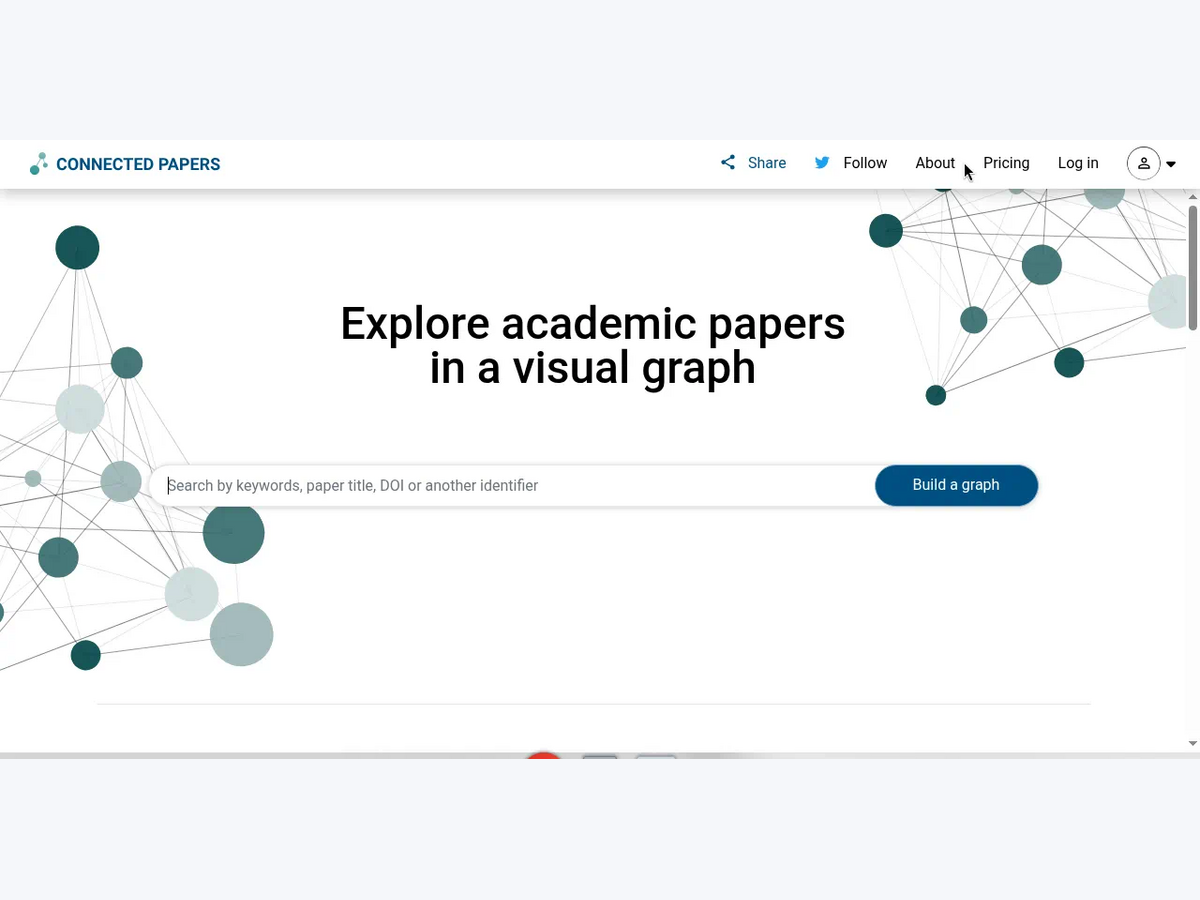
I opened the homepage anonymously on 7 September 2026. No cookie banner. The search box sat front and center under “Explore academic papers in a visual graph.”
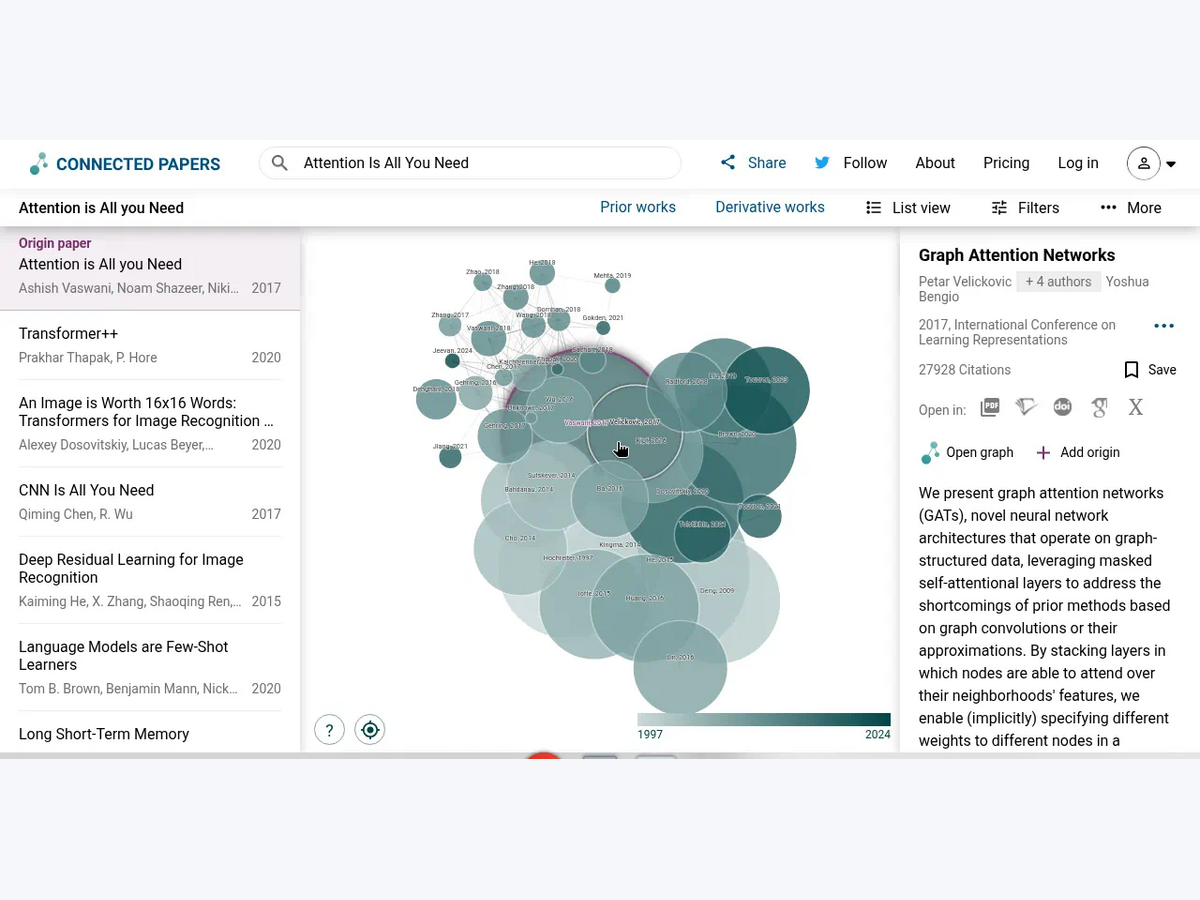
I typed Attention Is All You Need and picked the matching suggestion. The graph showed up in about 2 to 3 seconds. No email. No password. No mandatory registration. I honestly expected a soft gate after the first build. It did not show up.
A first-use overlay, “How to read the graph,” sat on top of the canvas. Helpful once. Awkward as a first impression, because it covers the thing you came to click. I closed it. The origin node was Attention is All You Need (Vaswani et al., 2017), with about 190,520 citations at the time of the test. Node size tracked citation scale, and a year legend ran from older work into recent years.
I clicked related nodes, including LLaMA: Open and Efficient Foundation Language Models and Learning Phrase Representations using RNN Encoder–Decoder for Statistical Machine Translation. Each click filled a right-hand detail pane with authors, year, citation count, external-open icons, and an abstract. That pane is where I actually read. The graph labels themselves overlap too much for long titles.
Then I opened Prior works and Derivative works. Both were usable anonymous tables with sortable columns and a Download control. Prior works showed older anchors like Effective Approaches to…, Neural Machine Translation…, Dropout…, and ImageNet. Derivative works showed later papers such as Open Problems in Applied Deep…, Neural Machine Translation…, and Deep Representation…. Those tables are why I would come back.
I changed the view two ways. I switched to List view (URL went to /list). In filters, the panel reported 13 Open access, 32 PDF available, and 0 Code available. I turned on Open access. The toolbar showed Filters (1), the left list narrowed, and non-matching nodes on the graph washed out. Readable, not broken.
More → Download worked without login. I got ConnectedPapers-for-Attention-is-All-you-Need.bib at about 57.5 KB. Share opened a free modal (Facebook, LinkedIn, Twitter, Email, Copy link, plus a checked “Link to this graph” option). No account wall.
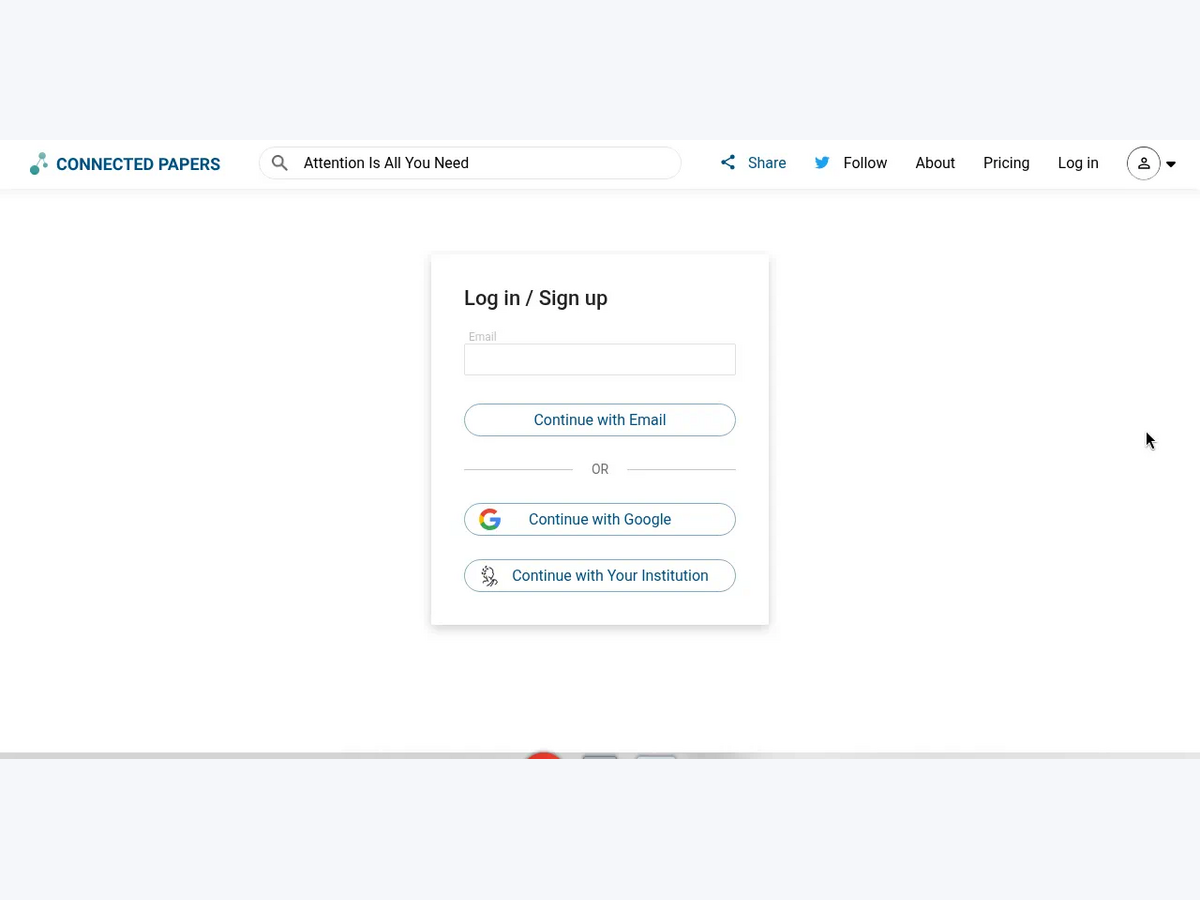
Save was the wall. It sent me to /auth with Log in / Sign up, email, Google, and institution options. I did not create an account. The graph work I came for was already done anonymously.
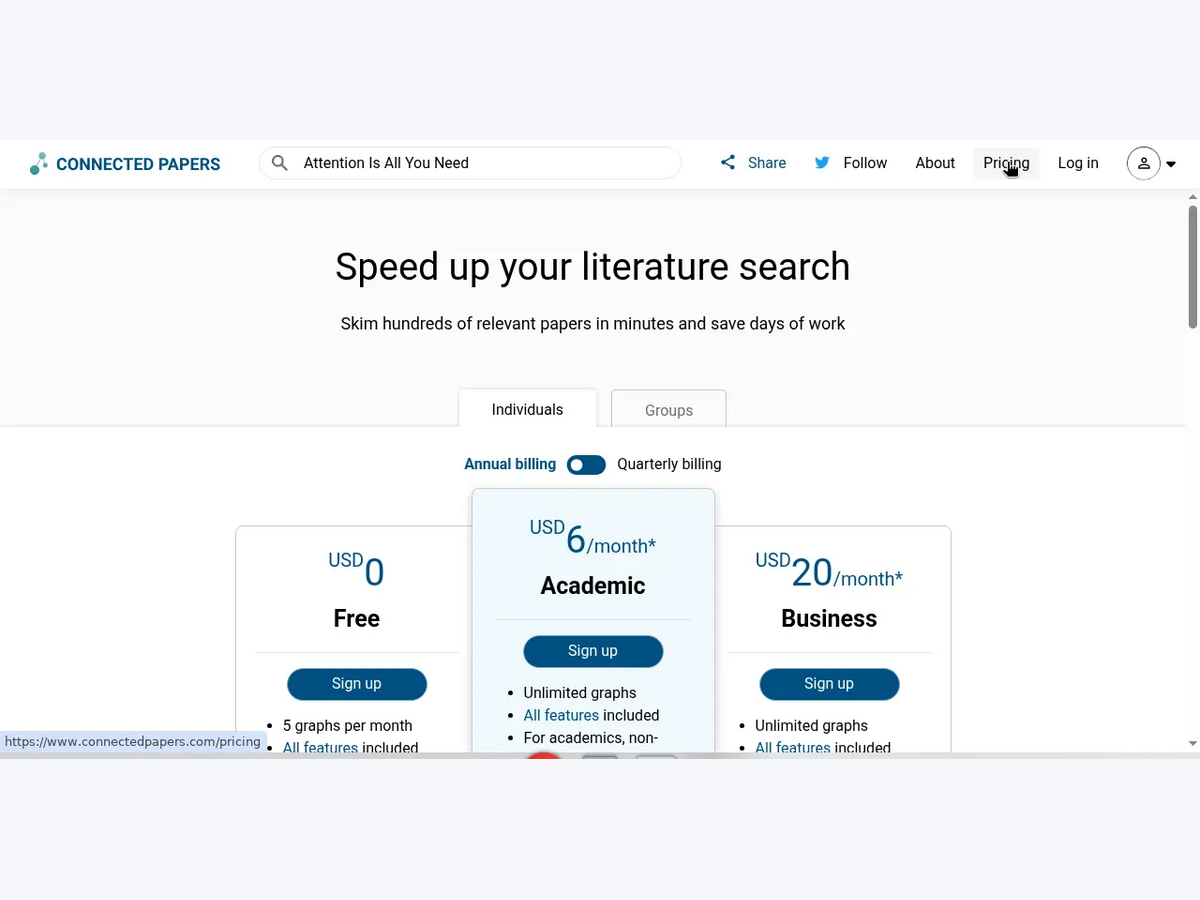
Pricing (Individuals, annual billing): Free USD 0 with 5 graphs per month; Academic USD 6/month; Business USD 20/month. Academic and Business claim unlimited graphs. The page lists similarity graphs, prior/derivative works, multi-origin graphs, saved papers, and graph history on the plans. I entered no card.
What worked and what annoyed me
The speed is the point. A full neighborhood in a few seconds, no email, is rare for research tools. Citation-sized nodes plus a year legend make browsing feel like a map, not another search results page.
Prior works and Derivative works are the sleeper hit. Sortable citation and year columns, plus anonymous download, beat hunting through reference lists by hand. BibTeX export and Share both worked without login. That boundary is clear: explore and export free, Save needs an account.
What kept it from a 5/5 were the overlapping node labels in dense clusters, the blocking first-use overlay on top of the main canvas, and Save sitting behind auth. The Open access filter also fades the graph instead of rearranging it. Fine once you know. Still a bit washed-out.
Not tested
- No email signup, verification, password, Google login, or institution login
- No second-origin graph for BERT (I changed the view with List and Open access instead)
- No PDF/DOI/publisher full-text opens, graph history, multi-origin add, or export formats beyond the observed
.bib - No payment, upgrade checkout, or credit card flow
- I also did not burn through the free “5 graphs per month” cap, so I cannot say how the limit feels on day 20 of a lit review
Who this is for
If you need to survey a subfield around one key paper, click into neighbors, skim Prior/Derivative tables, and grab a BibTeX file in a few minutes without handing over an email, this session did that. If you need saved graphs, history, or more than five graphs a month on the free plan, you are looking at Academic or Business. I did not run those paid paths, so I will not score them.
Verdict
Connected Papers gave me a real citation map before any account wall. Graph build was fast, Prior/Derivative tables were useful, and anonymous BibTeX plus Share worked. Crowded labels and the Save gate keep it under a 5.
Final rating: 4 out of 5.
Sources: https://toolifynav.com/item/connected-papers (official website, verified during review).
ToolifyNav Directory
Explore Connected Papers on ToolifyNav
A graph from a seed paper so prior and derivative work stops hiding behind bad keywords.
Keep Reading
Related posts
AI Tool Reviews
Felo Review: 4/5 — Anonymous Search Nailed a Chile Trap, Signup Hit an Image Captcha
Anonymous Felo search answered a three-part Argentina fact check in about 21 seconds, caught the Aconcagua-in-Chile trap, and rewrote the answer in Spanish with citations kept. Signup stopped on an image captcha. Final rating: 4 out of 5.
AI Tool Reviews
ChatPDF Review: A Trap Question, a Missing Citation and a Fair Free Tier (4/5)
I wrote a two-page darkroom handbook, hid a trap question in it and asked ChatPDF's free tier four questions. It got all four right and refused to invent a price, but one cross-page answer cited the wrong page for half its maths.
AI Tool Reviews
Cleanup.pictures Review: Fast Inpainting Behind a 720p Gate (4/5)
Cleanup.pictures let me wipe SAMPLE WATERMARK, FOR SALE — DEMO, and REMOVE ME off a watch photo in about six seconds of server time — then handed back a 720×523 free download with the HD gate spelled out up front.