Paperguide
AI research platform for literature and systematic reviews that searches 200M+ papers with cited answers, manages references, extracts data into tables and drafts citation-grounded text.
Evaluation
What to know
Editorial notes based on the vendor's own documentation and public pricing, plus hands-on testing where a score or review is shown above. They describe fit for a job, not absolute quality.
Best for
- Graduate students writing literature reviews
- Health-economics and regulatory teams running systematic reviews
- Researchers extracting data across many studies
Not ideal for
- Casual readers who only want quick summaries
- Fields dominated by books or grey literature
- Teams locked into an institution's existing review software
Key features
- AI Search over 200M+ papers with source-linked answers
- Reference Manager with Zotero and Mendeley import
- Extract Data tables pulling variables from many papers
- Systematic Review module with PRISMA flow and dual screening
- Citation-grounded AI Writer and Deep Research reports
Pros
- Covers the path from first search to cited draft in one tool
- Human-in-the-loop screening suits audited reviews
- The free tier includes 2,000 monthly AI credits and Zotero import
Cons
- Systematic-review size is capped by plan, at 1,000 papers on Plus
- PRISMA-grade dual screening requires the Evidence Teams tier
- Answers are only as complete as the accessible full text
ToolifyNav verdict
Paperguide stands out in the research category for taking systematic reviews seriously instead of stopping at summaries. Protocols, documented searches, recorded screening decisions and PRISMA output make it relevant to regulated work where every inclusion has to be defended, while the reference manager and extraction tables serve ordinary literature reviews just as well. Plan limits on review size and reviewer workflows mean serious teams will land on the upper tiers. Students and evidence-synthesis professionals who want search, extraction and writing joined up get a strong, citation-first option.
About
About Paperguide
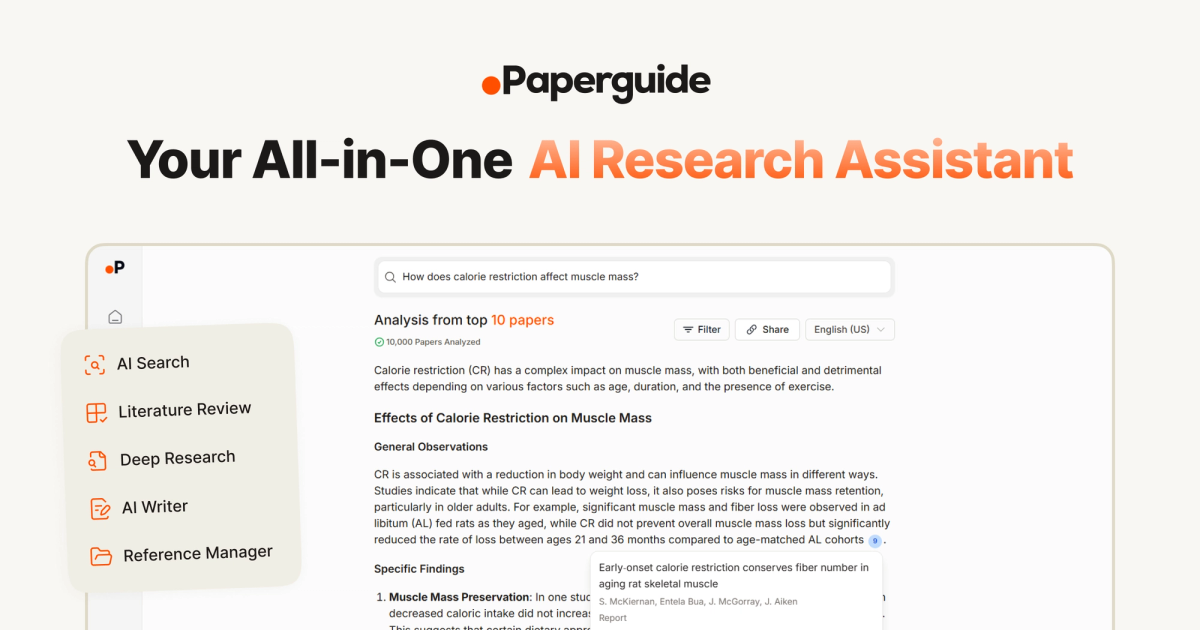
Paperguide began as an AI paper summarizer and has grown into a workspace for evidence synthesis, with a particular focus on systematic reviews. Its AI Search answers a research question in plain language by synthesizing findings from more than 200 million papers, linking every claim to a source so you can check it rather than trust it.
Papers you keep land in a Reference Manager that imports from Zotero and Mendeley, accepts DOIs and feeds the rest of the platform. Extract Data pulls details such as sample sizes, methods or outcomes from many papers into a structured, cited table. A Research Agent compares studies and maps a field, Deep Research and Literature Review reports produce longer write-ups, Chat with PDF answers questions about a single document, and an AI Writer drafts text with citations. A plagiarism checker, a search API and an MCP server are included.
The newest module is Systematic Review, which runs a predefined protocol, documented search, screening and a PRISMA flow diagram in one place. AI prepares cited evidence for each inclusion criterion, but humans make the decisions, with dual-reviewer screening and conflict resolution on the team tier. Paperguide markets this to medical-device makers, health-economics consultancies, pharma and government teams as well as academics, and says more than a million researchers use it.
Related
More in Research & Data Analysis
Same category — not a curated competitor list.

Discover More
Weekly digest
Get weekly AI tools and hands-on reviews
A short digest of new tools and hands-on breakdowns. Unsubscribe anytime.