Kiro
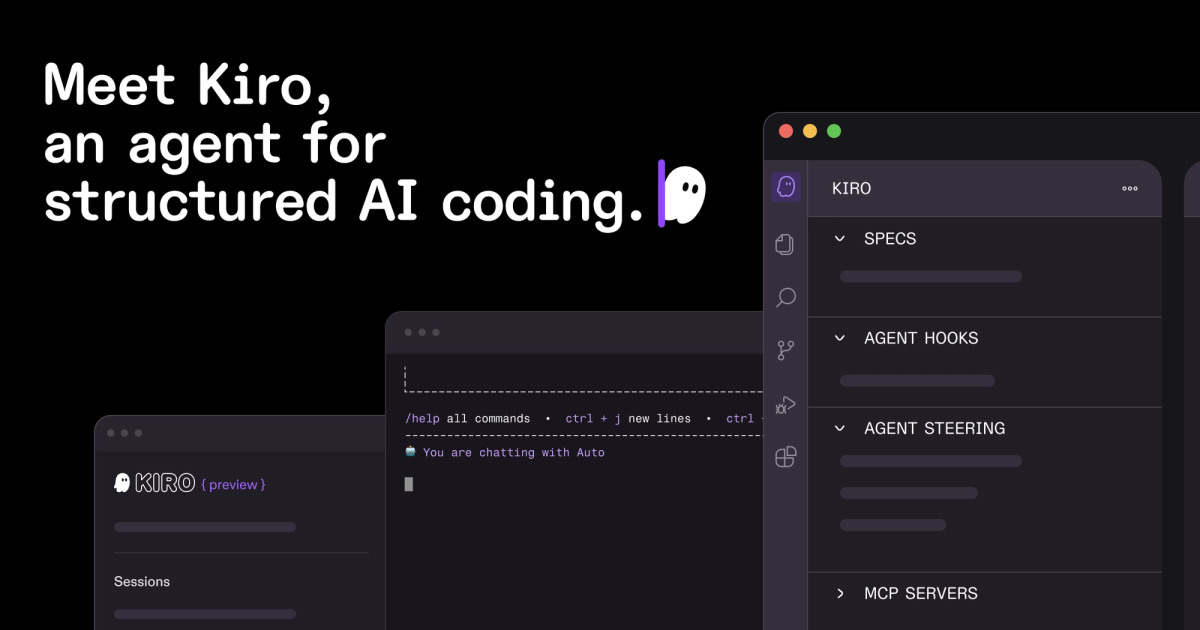
AWS-built agentic IDE and CLI that turns prompts into requirements, design and task specs before writing code, with hooks, steering files and parallel cloud agents.
Evaluation
What to know
Best for
- Teams that want AI output tied to reviewable requirements
- Developers already invested in AWS tooling and Builder ID
- Engineers running long multi-file features with agents
Not ideal for
- Developers who want lightweight autocomplete only
- Shops standardized on JetBrains IDEs
- Hobbyists who would burn through 50 free credits quickly
Key features
- Spec-driven workflow producing requirements, design and task documents
- Agent hooks triggered by file saves and other events
- Steering files that encode project conventions
- Kiro CLI v3 with cloud sessions and Kiro Crew parallel agents
- Auto model router plus premium models on paid tiers
Pros
- Specs leave an auditable trail of what the agent intended to build
- VS Code compatibility keeps the switching cost low
- Clear credit tiers from a perpetual free plan up to heavy-use plans
Cons
- Spec ceremony feels slow for quick one-line fixes
- Credit consumption varies by model and task size
- Premium models are not available in every country
ToolifyNav verdict
Kiro stands out in the crowded Coding category by slowing the agent down on purpose. Writing requirements and a design before touching code is extra work on small tasks, but it pays off on features that span many files, where unstructured agents tend to wander. Hooks and steering files give teams a way to encode habits once instead of repeating them in every prompt. The credit system is transparent about tiers but less so about how fast a given job drains them. Developers who value traceable, reviewable agent work will find Kiro closer to how engineering teams already plan; quick-fix coders may prefer something lighter.
About
About Kiro
Kiro is Amazon Web Services' answer to Cursor and Windsurf, launched in 2025 as a standalone editor built on the open-source Code OSS base, so VS Code settings and many extensions carry over. Its defining idea is spec-driven development. Instead of jumping straight from a prompt to code, Kiro first writes structured specs — requirements with acceptance criteria, a technical design and a task list — that you review and edit, then implements against them. AWS frames it as moving "beyond AI coding to agentic engineering."
Several features support that discipline. Agent hooks fire automatically on events such as saving a file, so an agent can update tests or docs without being asked. Steering files hold project conventions that every session respects. Kiro also claims to validate code correctness to catch bugs unit tests miss. The Kiro CLI, now on version 3, brings the same agents and specs to the terminal and can launch cloud sessions, and Kiro Crew runs multiple agents in parallel against large codebases.
By default prompts go through "Auto," a router that mixes frontier models with specialized ones; paid plans add premium models such as Claude Sonnet 5 and Claude Opus 5, and the free tier offers Claude Sonnet 4.5 plus open-weight models. Usage is metered in credits.
Related
More in Coding & Development
Same category — not a curated competitor list.
Discover More
Weekly digest
Get weekly AI tools and hands-on reviews
A short digest of new tools and hands-on breakdowns. Unsubscribe anytime.