Trae
ByteDance's AI coding environment pairing a VS Code-style IDE with SOLO, an autonomous agent mode, plus custom sub-agents, MCP tools and TraeWork cloud tasks.
Evaluation
What to know
Best for
- Students and indie developers building prototypes on a budget
- Developers experimenting with autonomous agent workflows
- Builders who want custom sub-agents without writing a framework
Not ideal for
- Enterprises with strict code-confidentiality requirements
- Teams needing predictable flat-rate seat pricing
- Developers committed to JetBrains or Neovim
Key features
- Classic IDE mode with chat-driven and inline AI editing
- SOLO mode for fully autonomous build-and-deploy runs
- Custom agents that can act as sub-agents for other agents
- MCP integration and a built-in browser preview for debugging
- TraeWork cloud tasks running in parallel on web or desktop
Pros
- Entry pricing is among the lowest of any agentic IDE
- SOLO mode handles greenfield prototypes end to end
- Familiar VS Code layout and extension compatibility
Cons
- Prices and free-plan availability vary by country, which complicates team budgeting
- Telemetry and data-handling questions matter for corporate code
- Usage is token-metered, so heavy agent runs drain a plan quickly
ToolifyNav verdict
Trae is the value play in the Coding category. Its low entry price, SOLO mode and open agent framework make it an easy way to see how far an autonomous coding agent can take a prototype. The product is moving fast, with frequent renaming and billing changes, and the region-specific pricing means two teammates may see different plans. Corporate users will weigh ByteDance's data practices more heavily than individual tinkerers do. As a personal or learning environment, Trae delivers a lot of agent capability for very little money; for proprietary codebases, the data review should come before the trial.
About
About Trae
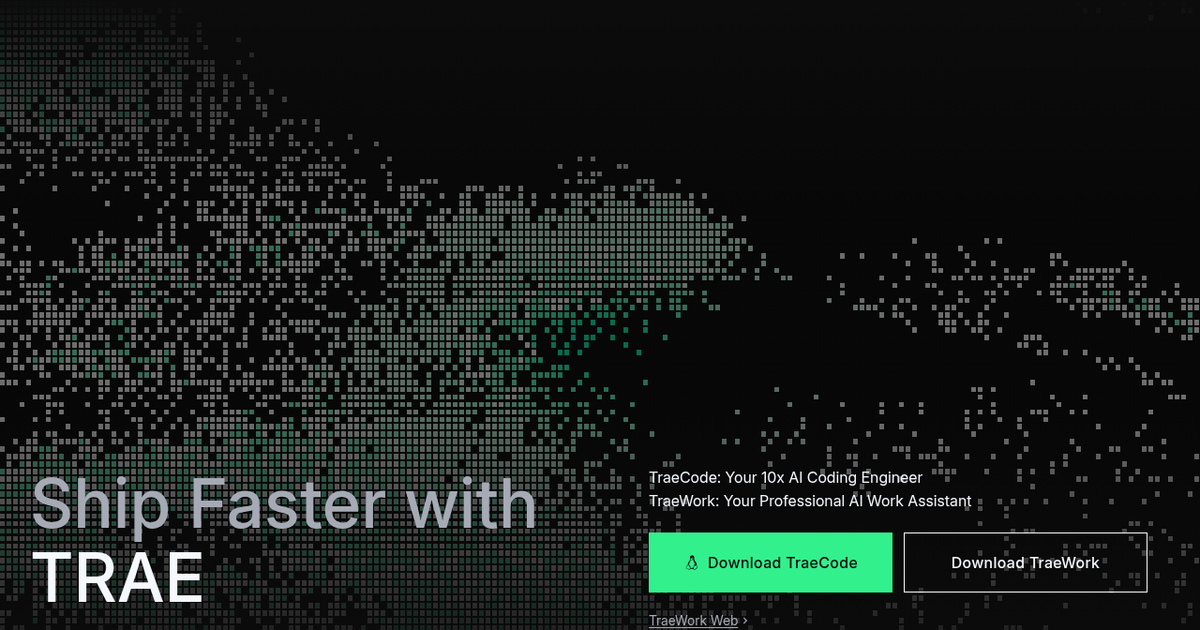
Trae is the AI-native code editor from ByteDance, the company behind TikTok. It arrived in early 2025 as a VS Code fork with generous free access to frontier models, and quickly picked up a large following among students and indie developers. The product has since split into TraeCode, the IDE, and TraeWork, a web and desktop space for running agent tasks in the cloud.
Trae offers two ways to work. IDE mode keeps you in a familiar editor with agentic chat, inline edits and autocomplete. SOLO mode hands the whole job to an autonomous agent that plans, edits, runs tools, previews and deploys, while you watch and steer. Built-in agents cover common jobs, and you can define custom agents with their own tools, skills and logic, then call them as sub-agents from other agents. Model Context Protocol support lets agents reach external resources, and a built-in preview tab lets them inspect page elements and console logs while debugging.
Billing moved to token-based "dollar usage" in February 2026. Plan names are consistent worldwide, but prices and the free tier differ by region: the US page starts at a $3 Lite plan, while the documentation and other regions list a Free plan limited to Auto mode. Some developers have raised questions about the IDE's telemetry, so teams with strict policies should review its data settings.
Related
More in Coding & Development
Same category — not a curated competitor list.
Discover More
Weekly digest
Get weekly AI tools and hands-on reviews
A short digest of new tools and hands-on breakdowns. Unsubscribe anytime.