Typecast
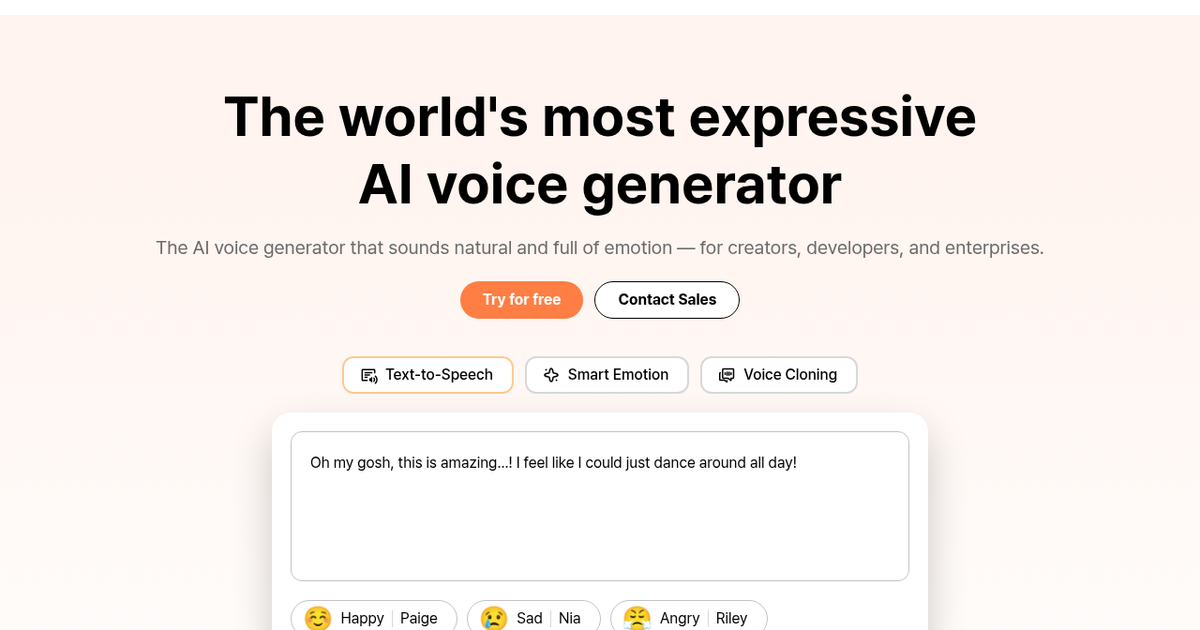
Expressive text-to-speech studio and API from Korea's Neosapience, with 600+ voices, context-aware emotion control, instant voice cloning and a built-in video editor.
Evaluation
What to know
Best for
- YouTubers and storytellers needing emotional narration
- Game and app developers adding character voices via API
- Creators who want cloned voices across languages
Not ideal for
- Call-center teams needing low-latency phone agents at scale
- Users who need a free tool for long commercial projects
- Podcasters who prefer recording their own audio
Key features
- Emotion presets plus Smart Emotion that reads script context
- 600+ voices in 35+ languages, including licensed actor voices
- Instant voice cloning that speaks multiple languages
- Script editor with integrated video editor
- TTS API with real-time voice and SDKs in five languages
Pros
- Expressive delivery suits drama, games and storytelling
- Entry paid tier is inexpensive
- Same models available in the studio and the API
Cons
- Free downloads are capped at about five minutes and need attribution
- Commercial licensing and watermark-free video require higher plans
- Emotion control still needs line-by-line tweaking on long scripts
ToolifyNav verdict
Typecast is aimed at creators who need performance, not just pronunciation. Its emotion system and context-aware delivery handle dialogue and storytelling better than many tools tuned for neutral narration, and the combination of studio, video editor and API covers both creators and developers. The free tier is a demo rather than a working plan, and commercial use requires climbing a few tiers. For YouTube storytellers, indie game teams and anyone producing character-driven audio, it is worth trying alongside better-known voice platforms; enterprise contact-center needs are better served by specialist voice-agent providers.
About
About Typecast
Typecast is developed by Neosapience, a Seoul-based speech-synthesis company, and it markets itself on emotion. Rather than a single neutral read, its voices can be pushed to sound happy, angry, whispering or low-toned, and a "Smart Emotion" mode infers the right delivery from the surrounding script, so a line of dialogue reads differently after good news than after bad. Speed and dynamics are adjustable too.
The catalog covers more than 600 AI voices across 35-plus languages, including exclusive voices licensed from real voice actors. Instant cloning lets you record your own voice and reuse it, with the cloned version able to speak other languages or deliver lines faster and with more emotion than you might in a booth. Inside the web editor, you type a script, assign voices to lines, and fine-tune performance; an integrated video editor then pairs narration with visuals for YouTube, explainer and short-form content, with HD or Full HD exports depending on plan.
Developers can call the same models through a TTS API with SDKs for Python, JavaScript, Java, Kotlin and Rust, including real-time voice and prompt fields that pass previous and next text for context-aware speech. The free plan offers unlimited generation and playback but only a few minutes of downloads, and requires attribution. Paid tiers add all voices, higher-quality audio, cloning slots, commercial rights and video exports without a watermark.
Related
More in Voice Generation & Conversion
Same category — not a curated competitor list.
Discover More
Weekly digest
Get weekly AI tools and hands-on reviews
A short digest of new tools and hands-on breakdowns. Unsubscribe anytime.