Paperguide vs Consensus: Cited Answers, Two Different Jobs
Paperguide wrote a cited daguerreotype answer I could open paper by paper. Consensus answered a fasting question with a meter across twenty studies. Both scored 4/5 for different jobs inside cited research.
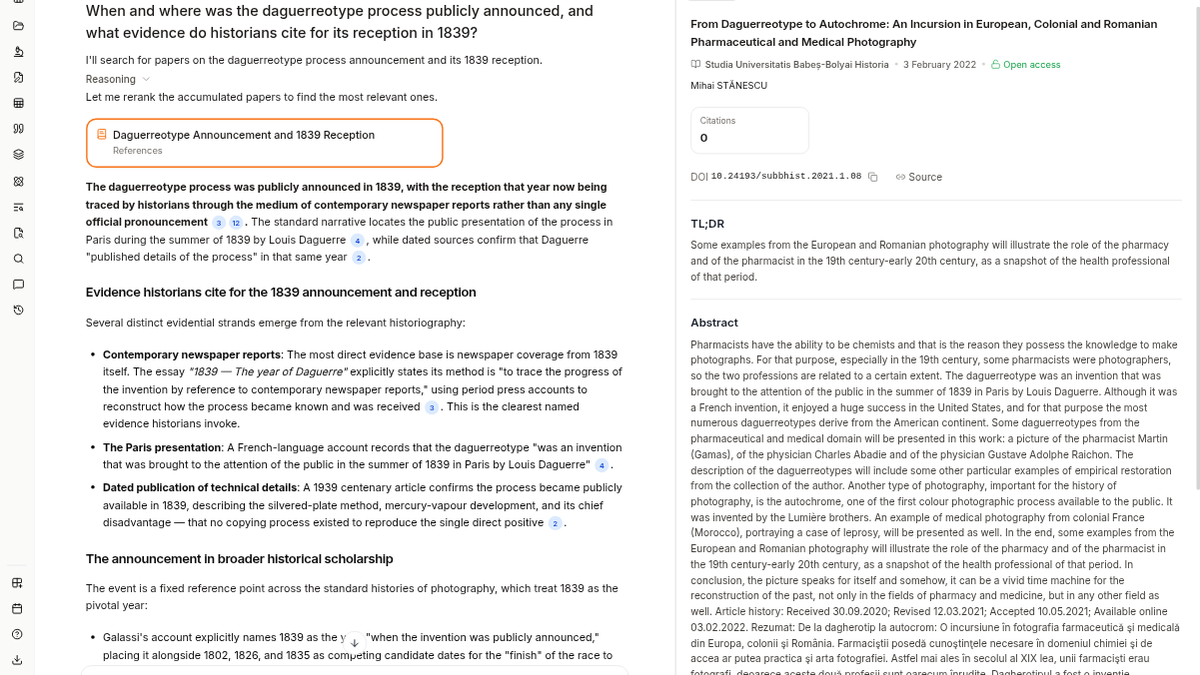
Both Paperguide and Consensus sold me on the same promise: answers drawn from real papers, with citations I can open. In practice they do different jobs inside that promise. Paperguide gave me a narrative answer I could walk through paper by paper. Consensus gave me a yes-or-no synthesis with a meter across the pool. I scored each one 4/5 for the job it actually finished. If you want a grounded write-up with openable DOIs and a free path that reaches search before email verification, start with Paperguide. If you want a falsifiable science question answered with a visible vote across papers after you sign in, use Consensus.
I tested them on different days with different questions, so this is not a same-prompt shootout. What I can compare is what each free path let me finish, and where each one stopped short of a five.
Paris in 1839, with the papers open

Signing up for Paperguide took under about two minutes. Email sign-up at paperguide.ai, a Turnstile check that passed on its own, no verification mail, and a pricing modal I dismissed without a card. Then I was on the AI Search dashboard.
My query was about the daguerreotype: when and where the process was publicly announced, and what evidence historians cite for its reception in 1839. The answer landed on Paris in the summer of 1839, with numbered inline cites. I opened at least three of them. Adamson 1989 in *History of Photography* (DOI 10.1080/03087298.1989.10441188), a 1939 *Nature* note (DOI 10.1038/143963a0), and Stănescu 2022 (DOI 10.24193/subbhist.2021.1.08) all matched title and DOI. The Stănescu abstract itself says the invention was presented in Paris in the summer of 1839 by Louis Daguerre. That is the moment the product has to earn: not a tidy summary, but a cite you can click and confirm.
I tried a trap next: did Louis Daguerre patent the daguerreotype in London in 1835, and was Talbot involved? Paperguide refused correctly. It pointed to the French state acquisition in 1839, Arago's presentation on 19 August 1839, English rights going to Richard Beard, and Talbot's separate calotype work. No fabricated 1835 London patent cites. For a short photo-history note, that refusal mattered as much as the first answer. The longer walkthrough is in my Paperguide review.
One Adamson paper that stayed put
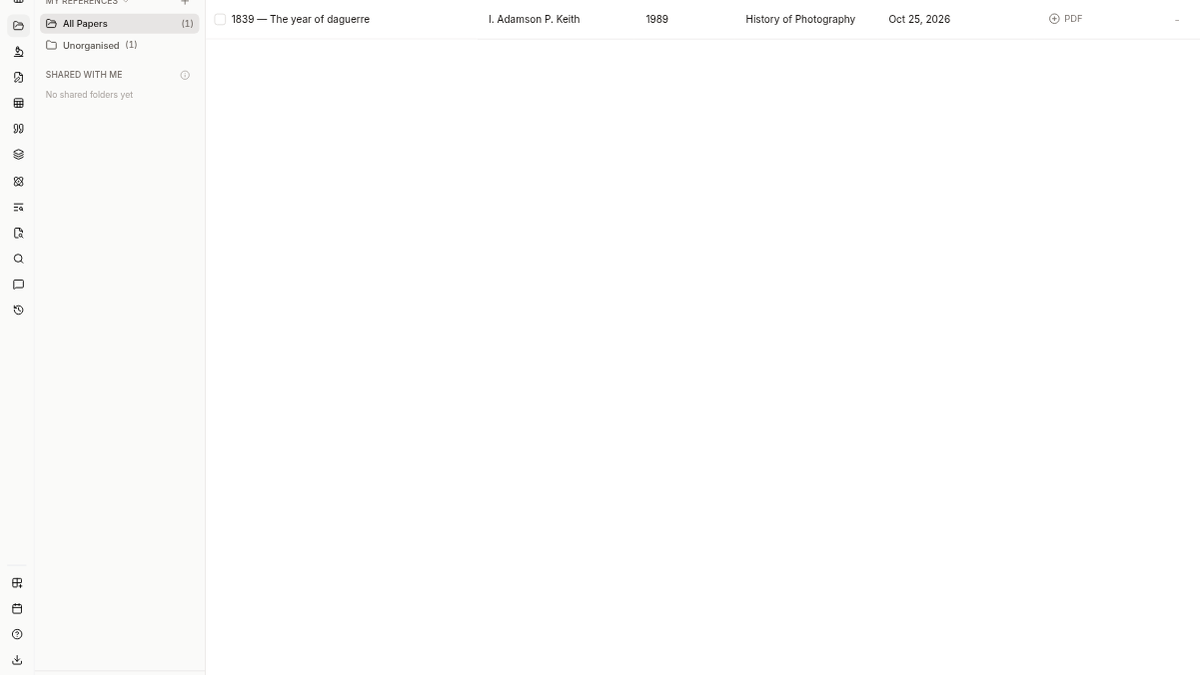
I saved the Adamson paper into My References. After a navigate to /references/, All Papers still showed 1. That is a small thing, and it is the kind of small thing that decides whether I trust a free research tool with a note I care about.
The free meters are less tidy. After two AI Searches the counters sat at ai_search 2/20 and dailyAiGenerations 2/5, while the plan credits stayed 1500/1500 with usedCredits at 0. AI Search burns a separate search quota, not the marketed 1,500 AI credits. The free plan ($0) lists those 1,500 credits for Reports and Writer work, plus limited Reference Manager and limited AI Searches. Plus is $12 per seat per month billed annually; Pro is $29; Evidence Teams is $89. If you came for the big credit number, check which meter your search actually hits before you plan a week's worth of queries around it.
A meter across twenty papers
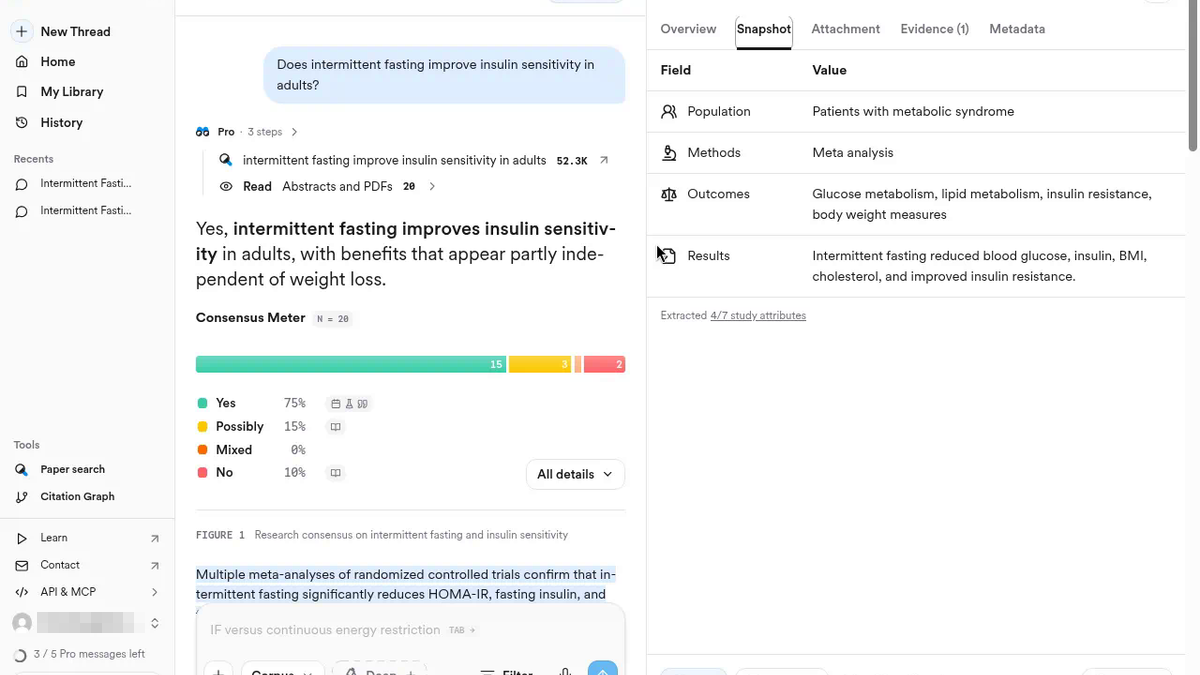
Consensus is built for a different shape of question. Mine was: does intermittent fasting improve insulin sensitivity in adults? Logged-out submit opened an email-auth wall (email, Google, or Apple). I used the email-code sign-up path — no card asked for. After onboarding, the sidebar showed 5/5 Pro messages left.
About thirteen seconds later the Pro synthesis was populated. The results pool sat at "52.3K". A "Read Abstracts and PDFs 20" line framed the working set. The AI synthesis opened with a clear yes — intermittent fasting improves insulin sensitivity in adults, though effects vary — and the Consensus Meter (N=20) made the vote visible: roughly 15 Yes, 3 Possibly, and 2 other. Paper cards carried titles, years, journals, and PDFs. Study Snapshot was free, with "10 Study Snapshots left" and a refresh date. The first paper I opened had DOI 10.1155/2022/6999907.
What kept it from a five is the same wall that starts the session. You cannot see results before the email step. The filter left "Results 52.3K" unchanged in my run. Snapshot stopped at 4 of 7 attributes. And Pro messages are a hard allowance once you are inside. The full session notes are in my Consensus review.
Two free paths that run out differently
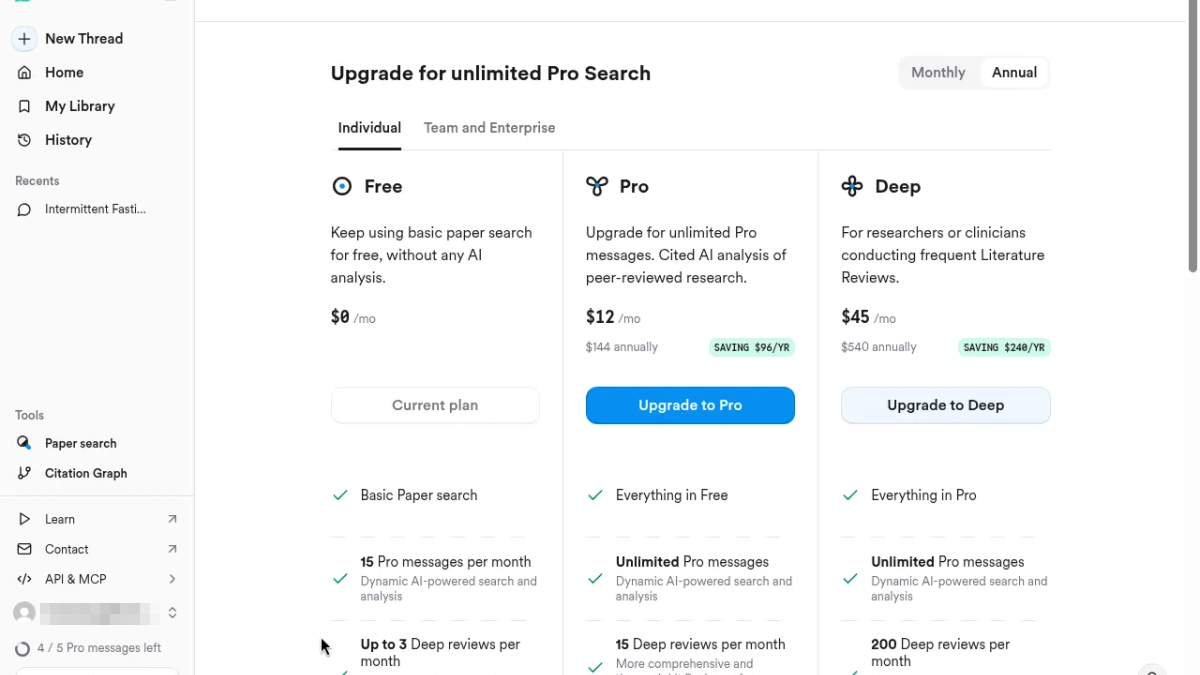
On annual pricing as shown in the app, Consensus Free is $0 with basic paper search free and limited Pro messages — my session started at 5/5 and dropped to 4/5 after one search. Pro is $12/month. Deep is $45/month. Paperguide Free is $0 with the credit and search split described above; its paid seats start at $12 annually for Plus.
Neither tool replaces a citation-graph product like Connected Papers when you already have a seed paper and want neighbors. That job lives elsewhere, and Consensus already has that comparison on the site. Here the choice is simpler. Need a yes/no science question with a meter across papers after you can sign in? Open Consensus. Need a grounded narrative answer with openable citations, and a free path that reaches search without verifying email first? Open Paperguide. Both earned a four. Pick the shape of answer you actually need, then open every DOI before you trust the sentence it sits under.
ToolifyNav Directory
Explore Paperguide on ToolifyNav
AI research platform for literature and systematic reviews that searches 200M+ papers with cited answers, manages references, extracts data into tables and drafts citation-grounded text.
Also Mentioned
More tools in this article
This tool on ToolifyNav
Consensus
Ask a falsifiable science question and meet studies, not listicles.
Keep Reading
Related posts
SaaS Reviews
Paperguide Review (4/5): Cited Answers That Survive a Trap
I asked Paperguide when the daguerreotype was announced and got a Paris-1839 answer with citations I could open. Then I tried to trick it into inventing an 1835 London patent. It refused. Final rating: 4 out of 5.
SaaS Reviews
Jenni vs Paperpal: One Writes the Paragraph, the Other Fixes Yours
Jenni wrote me a cited paragraph on the daguerreotype and three of its four sources held up. Paperpal caught all seven slips I seeded in my own paragraph. Same $12 entry price, opposite jobs, and two free meters that run out differently.
SaaS Reviews
Jenni Review (4/5): Real Citations, Paywalled Bibliography
I asked Jenni for a cited paragraph on the daguerreotype. Every source it cited was a real paper, three of four actually backed their sentences, and a paraphrase took four seconds. The reference list itself is paywalled on free. Final rating: 4 out of 5.